

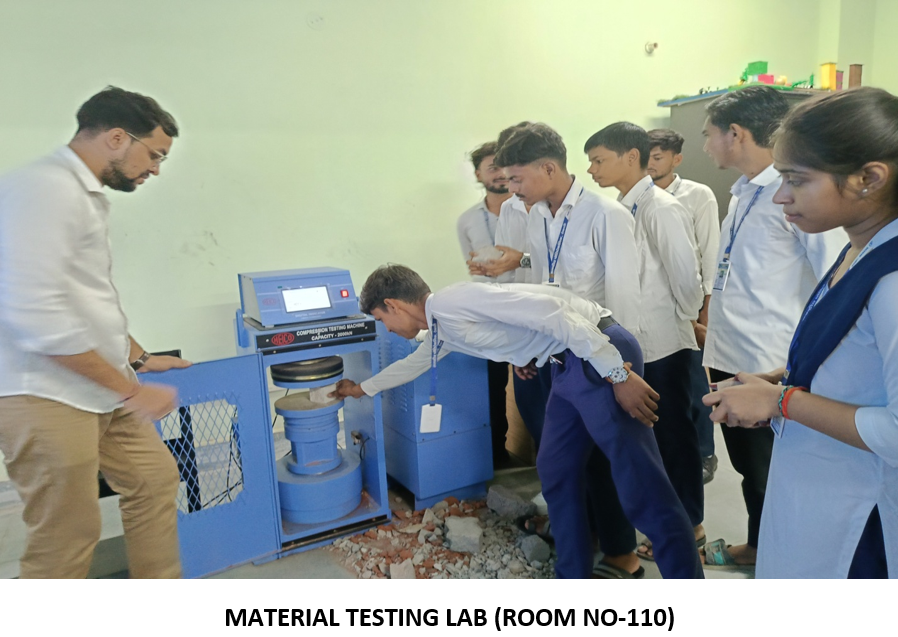
1. Material Testing Laboratory
The Material Testing Laboratory at Government Polytechnic Tekari, Gaya provides practical knowledge of the mechanical properties of engineering materials. Students perform tests such as tensile, compression, hardness, impact, and torsion testing using standard testing equipment. The laboratory helps students understand material behavior under different loading conditions and develops skills in selecting suitable materials for engineering applications.
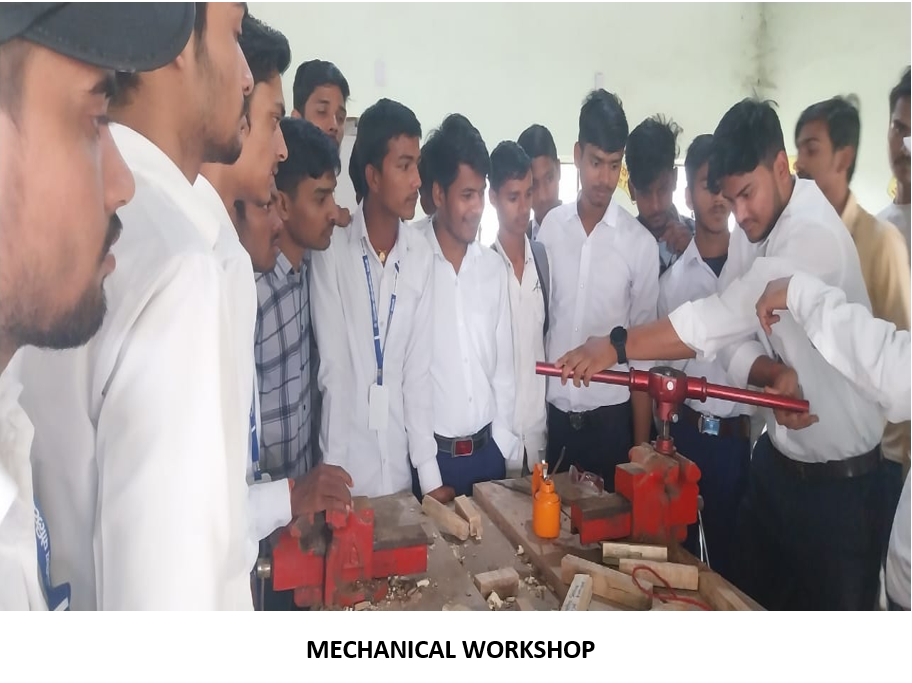
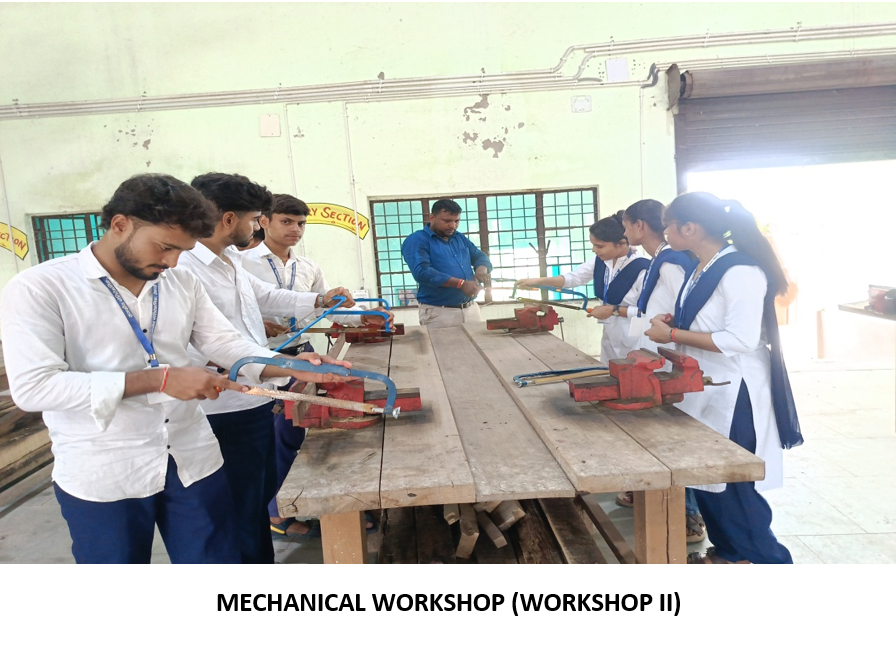
2. Mechanical Workshop
The Mechanical Workshop is the foundation of practical engineering education. It offers hands-on training in fitting, carpentry, welding, smithy, sheet metal work, machining, and basic fabrication processes. Students learn safe handling of tools, workshop practices, and manufacturing techniques, enabling them to develop practical skills required in industries.
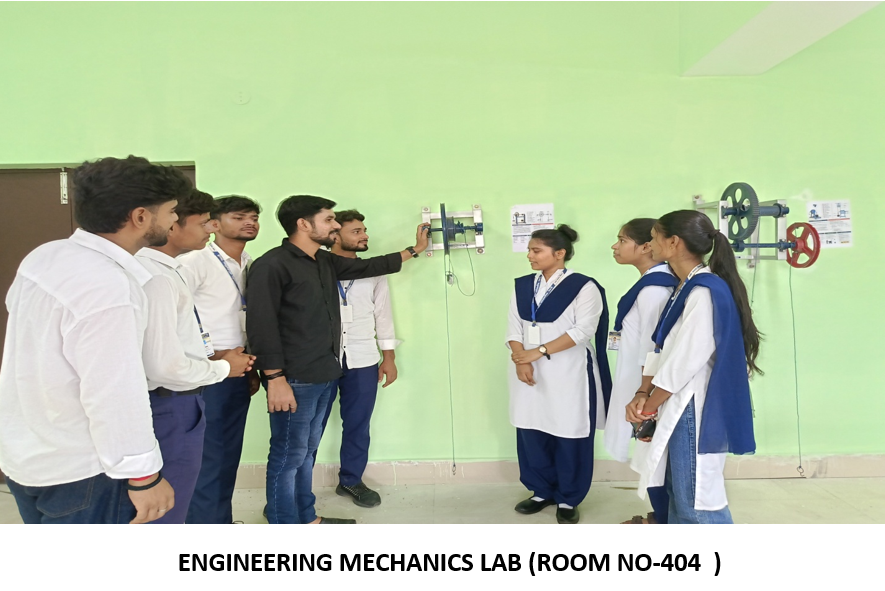
3. Engineering Mechanics Laboratory
The Engineering Mechanics Laboratory enables students to verify the fundamental principles of mechanics through experiments. Practical exercises include force systems, moments, equilibrium, friction, centroid, and simple machines. The laboratory strengthens analytical and problem-solving skills essential for mechanical engineering design and analysis.
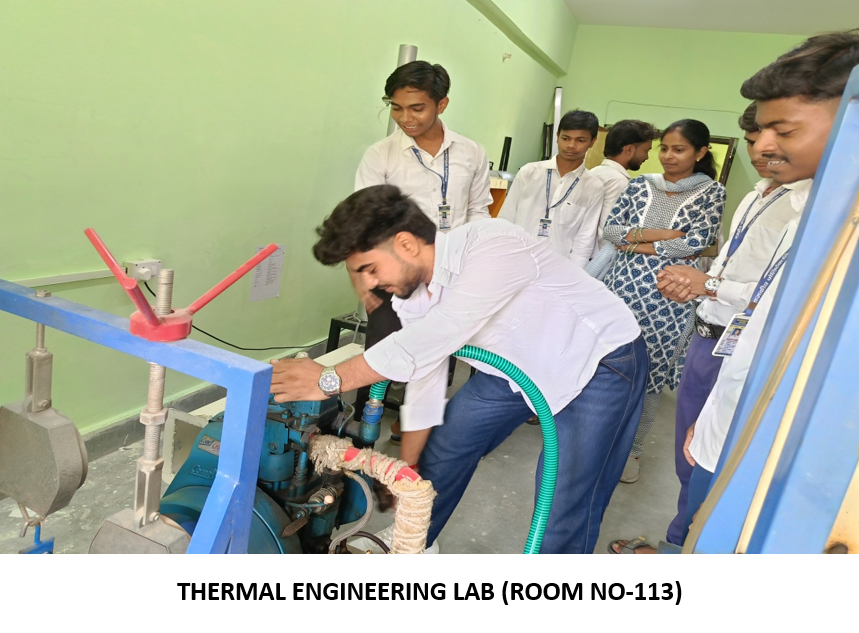
4. Thermal Engineering Laboratory
The Thermal Engineering Laboratory provides practical exposure to thermodynamics and heat transfer concepts. Students perform experiments on internal combustion engines, air compressors, refrigeration and air-conditioning systems, boilers, and heat exchangers. The laboratory helps students understand energy conversion processes and improves their knowledge of thermal systems.
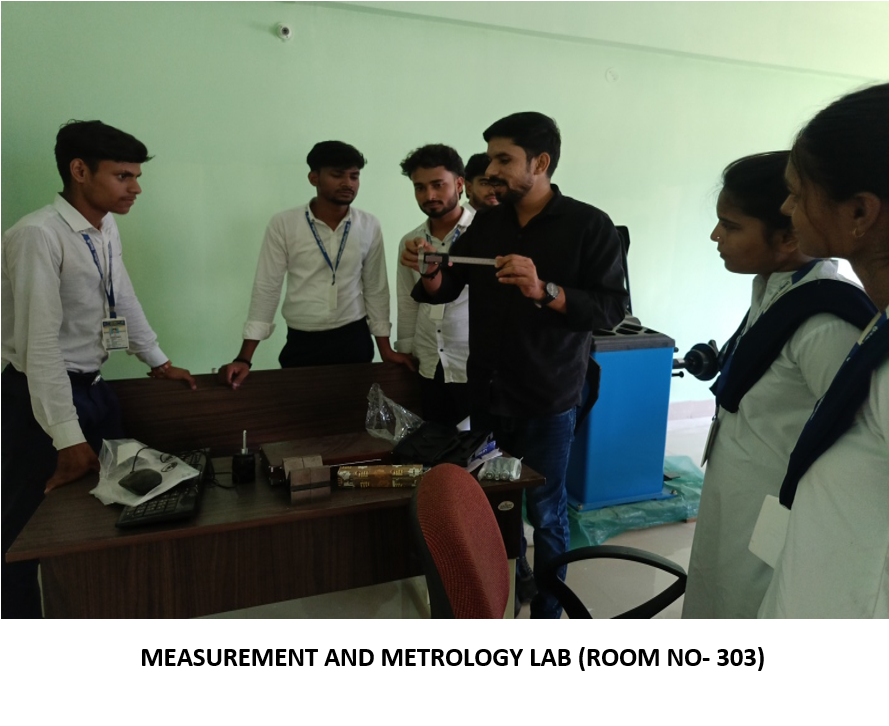
5. Measurement and Metrology Laboratory
The Measurement and Metrology Laboratory focuses on precision measurement and quality control techniques. Students learn to use instruments such as Vernier calipers, micrometers, dial gauges, slip gauges, height gauges, and comparators. The laboratory develops accuracy in dimensional measurement and inspection, which is essential in manufacturing industries.
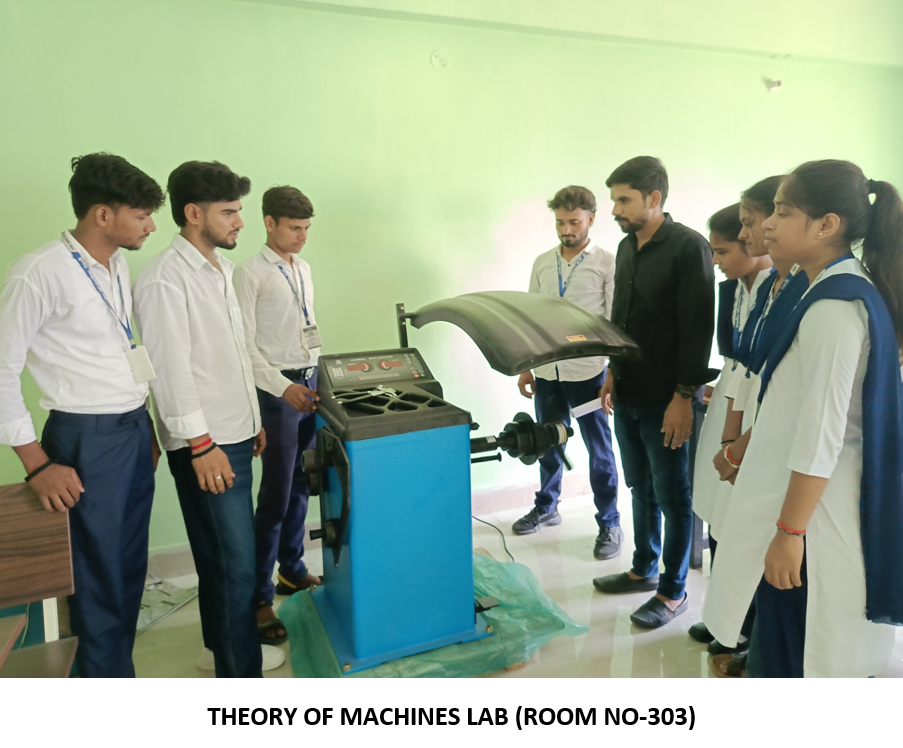
6. Theory of Machines Laboratory
The Theory of Machines Laboratory helps students understand the kinematics and dynamics of mechanical systems. Experiments include mechanisms, governors, gyroscopes, balancing of rotating masses, cams, gears, and vibration analysis. The laboratory bridges theoretical concepts with practical applications in machine design and operation.
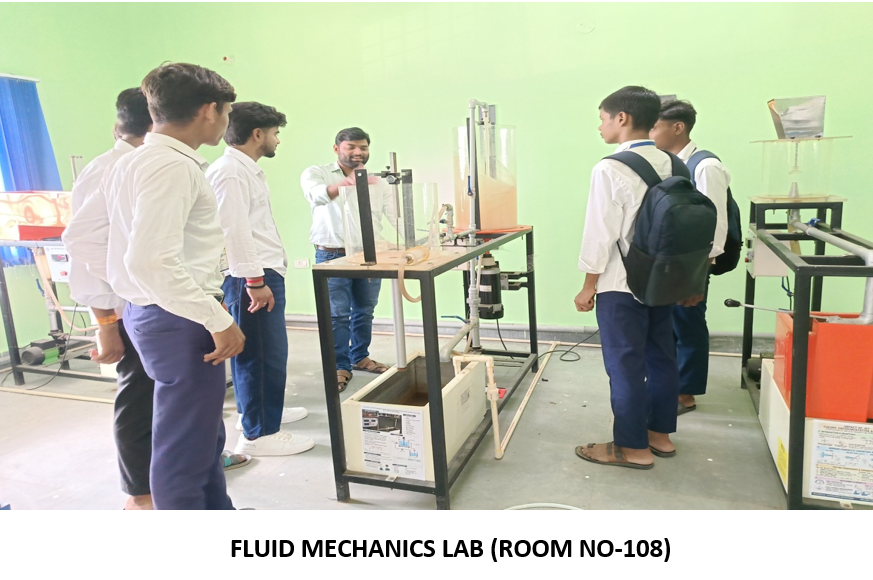
7. Fluid Mechanics Laboratory
The Fluid Mechanics Laboratory provides practical knowledge of fluid flow and hydraulic systems. Students conduct experiments on Bernoulli's theorem, flow measurement, pipe friction, hydraulic turbines, centrifugal pumps, and flow through orifices and venturimeters. The laboratory develops an understanding of fluid behavior in engineering applications.
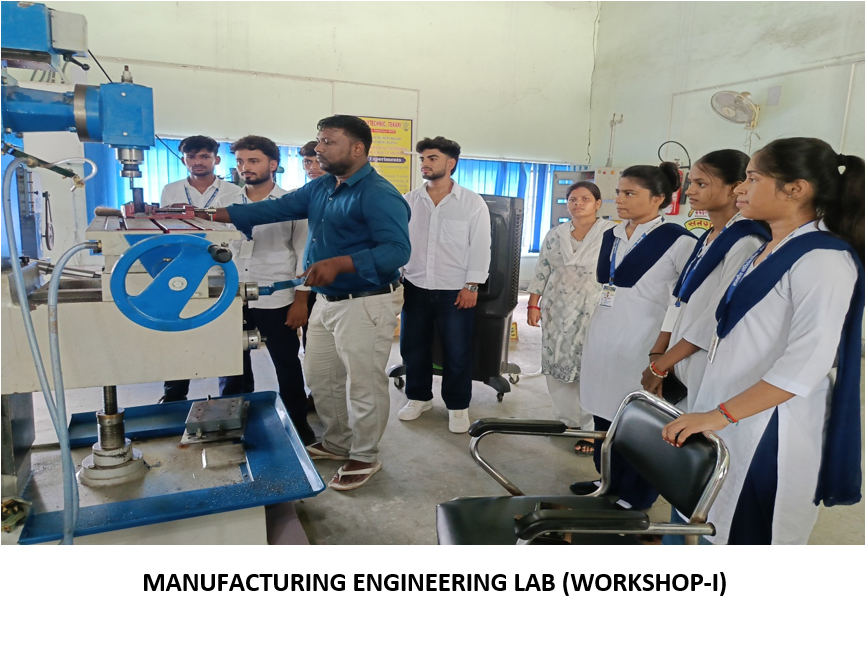
8. Manufacturing Engineering Laboratory
The Manufacturing Engineering Laboratory introduces students to modern manufacturing processes and machine tools. Practical training includes turning, milling, drilling, grinding, CNC machining, and machining parameter analysis. The laboratory enhances students' understanding of production techniques, machining operations, and manufacturing quality.
9. Mechanical Workshop (Skill Development)
The Mechanical Workshop also serves as a skill development center where students undertake fabrication and maintenance activities. Through project-based learning, students gain experience in assembling mechanical components, repairing equipment, and developing innovative engineering models. The workshop encourages creativity, teamwork, and industry-oriented practical skills.
These laboratories and the Mechanical Workshop at Government Polytechnic Tekari, Gaya provide students with comprehensive practical training, helping them bridge the gap between classroom theory and real-world engineering practice while preparing them for higher studies and employment in the mechanical engineering industry.